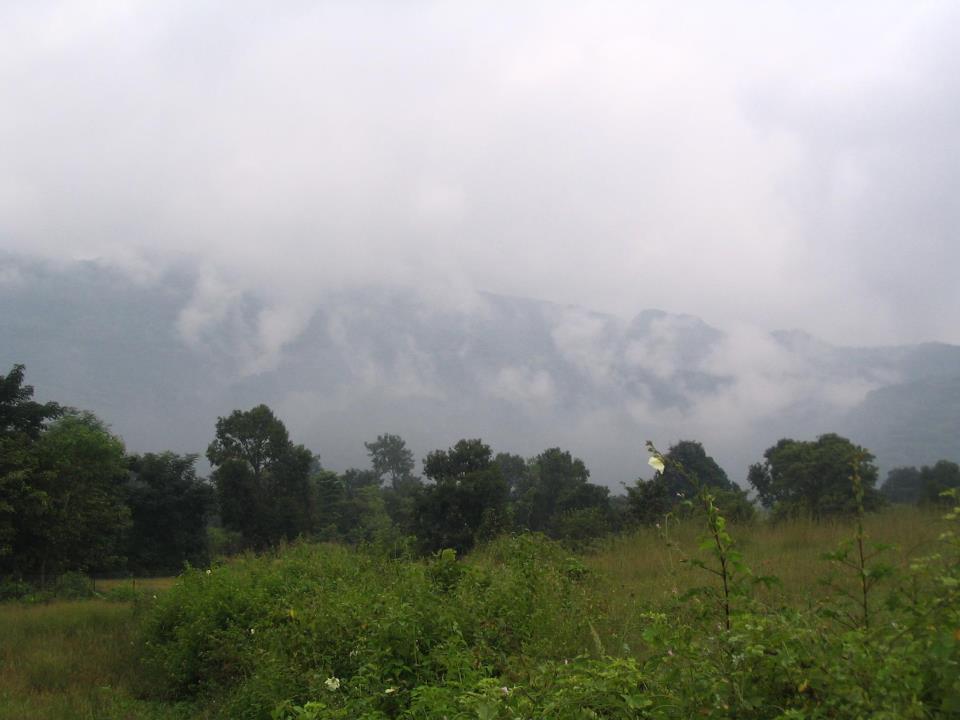
“Going to the mountains is like going home.” ~ John Muir
Not so far away from the hustling-bustling cities of Mumbai & Pune, we welcome you to an organic and eco-friendly experience that will be etched in your soul forever.
A pristine and holistic living atmosphere blessed with abundance of natural beauty of mountains, waterfalls, rivers and trees and Organic produce of Fresh Fruits, Vegetables, Cereals, Pulses, Grains etc. awaits you at our peaceful Org-Eco (Organic & Eco-friendly) Village.
While running the constant race in your busy city-life, you must have at some point dreamed of a owning an Eco-Home away from the concrete jungle that brings you closer to nature. But the more you wished to get closer to a ‘natural way’ of life to leave behind the ‘urban’ worries, the more it left you worried ! Because building or owning your own home comes with a series of things to be ensured, which unfortunately is very difficult to be accomplished by an individual living a hectic work life in cities of Mumbai, Pune & Nashik.
The inception of Org-Eco village is a testament to give you a Second Home and a new life at an organic farmland, without you having to lose your mind. We assure to take care of the entire end to end planning, development and maintenance of your new home that not only comforts your living but also fits in your budget. Whether it is the aspect of legalities, construction, managing human resources of workers and staff members or even the experience and knowledge of organic farming, we’ve got you all covered!
Escaping the chaos of a fast city life will now mean much more to you with the tranquility at our humble abode. Whether you wish to opt for a temporary relief from stressful work days or spend quality time with your family and your own self in your owned Eco-Home at our Org-Eco Village, your search for the perfect getaway ends here.
Our affordable and economically priced 25 naturally built Eco-Homes set amidst a lush green field, aim to offer you the gift of luxurious living in the lap of mother nature.
Begin your journey of sustainable living and get involved in learning and practicing organic farming. Delve deep into your soul by practicing yoga and mediation at dedicated halls or take a dip in the pool or river to cleanse your body and mind. Pick out your favourite fruits and vegetables straight out of the organic farm and put on the chef’s hat to hone your culinary skills at our kitchen. Bring back the child in you by playing traditional games with your family at the Org-Eco villages’ community hall or choose to run freely around trees with your kids. Watch the sunrise from the Sun-Deck in each and every Bedroom and the sunset by the riverside and enjoy an entertaining evening by the Amphitheater-Ghat every day.
Whatever you choose to do, we assure you a feeling of complete bliss during your time here.
So, make the dream of owning a Eco-home come alive, leave your worries behind and join us for a ride of holistic health and happiness. We can only promise you that it’ll be your wisest decision in a lifetime.